Slab Leak Signs in Newport Beach Homes
A slab leak is the hardest kind of leak to spot, because the pipe is buried under concrete. There is no puddle to see and no wall to open. Instead the signs show up sideways: a warm patch on the kitchen floor, a damp spot on the carpet that returns after you dry it, or a water bill that climbs while your household routine stays the same.
Many Newport Beach homes sit on concrete slabs, and many of them still run copper water lines beneath that slab. Salt air, shifting sandy soil, and decades of water flow wear on those buried lines, and when one splits, the water has nowhere to go but up through the floor or out into the soil. This guide covers the signs to watch for, the checks you can do yourself, and what detection looks like when you call for help.
Warm Spots and Damp Floors
A warm spot on the floor is the classic sign of a hot water slab leak. Walk barefoot across the kitchen, bathroom, and hallway floors and feel for a patch that is warmer than the floor around it. The warmth comes from hot water escaping the buried line and heating the concrete above it, and it often sits near where the water heater line runs under the house.
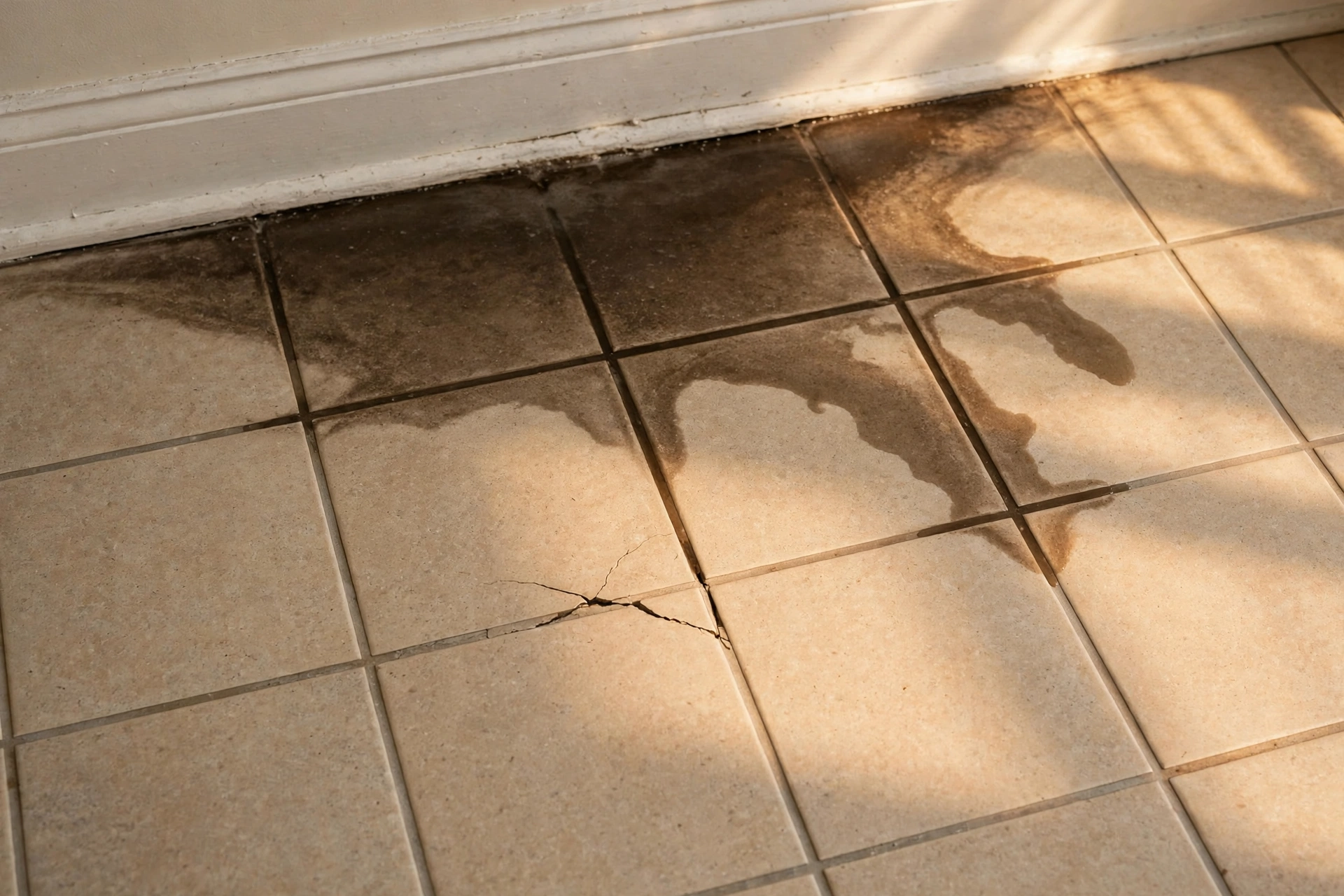
Damp floors tell the same story on the cold water side. Look for carpet that stays damp in one spot, laminate that cups or buckles, and tile grout that darkens or crumbles in a small area. In homes with tile floors, a damp patch can be easy to miss, so run your hand over the floor and feel for cool, clammy spots that do not match the rest of the room.
Cracks in flooring or in the base of a wall can follow a slab leak too, because water washing through the soil under the slab can let the concrete settle unevenly. A single hairline crack means little on its own, but a crack paired with a damp spot or a warm patch deserves a closer look before it grows.
Related: slab leak repair
Slab Leak Signs in Newport Beach Homes
Read the guide, then describe your burst pipe problem and request service.
Water Bills That Jump Without Explanation
A slab leak runs all day and all night, so it shows up on the water bill before it shows up on the floor. If your bill climbs sharply while your household uses water the same way it always has, a hidden leak is the first thing to suspect. Compare the current bill with the same stretch in earlier months, and look at the usage, not just the amount due.
The meter test is simple and it costs nothing but a few minutes. Turn off every tap, appliance, and irrigation valve in the house, then watch the meter dial. If the dial keeps moving, water is leaving the system somewhere, and if the house is dry inside, the leak is likely under the slab or in the yard line.
Do the meter test twice, once in the morning and once in the evening, because a slow leak can be hard to catch in a short watch. If the dial moves both times with everything off, you have a leak, and the next step is detection, not waiting to see if the bill comes back down. It will not.
Related: burst pipe leak detection, burst pipe repair in Irvine
Get Burst Pipe Help in Newport Beach Today
Tell us where the water is and request service anywhere in Newport Beach.
Sounds and Smells That Point to a Slab Leak
Listen for water when the house is quiet. A slab leak often sounds like a faint hiss or a steady trickle under the floor, loudest in the room above the break. Press your ear to the floor in the quietest part of the day, late at night or early in the morning, and listen for water moving when nothing is running.
A musty or earthy smell that hangs in one room can point the same way. Water pooling under a slab keeps the soil damp, and that dampness works its way up through the floor and into the air. The smell is strongest in rooms with carpet or wood flooring, which hold moisture and give mildew a place to grow.
Low water pressure across the whole house can round out the picture. A slab leak steals pressure before water reaches your taps, so the shower runs weak and the kitchen tap sputters at the same time the floor feels warm or the bill climbs. One sign alone may mean little, but two or three together mean it is time to check.
Related: burst pipe leak detection
Burst Pipe Repair Across the Orange County Coast
A local contractor can take your burst pipe request today.
What Happens During Slab Leak Detection
Detection starts with the simple checks: the meter test, a pressure test on the hot and cold lines, and a walk through the house to map warm spots and damp areas. Isolating the hot side from the cold side narrows the search, because a pressure drop on one side tells the technician which line is leaking before any equipment comes out.
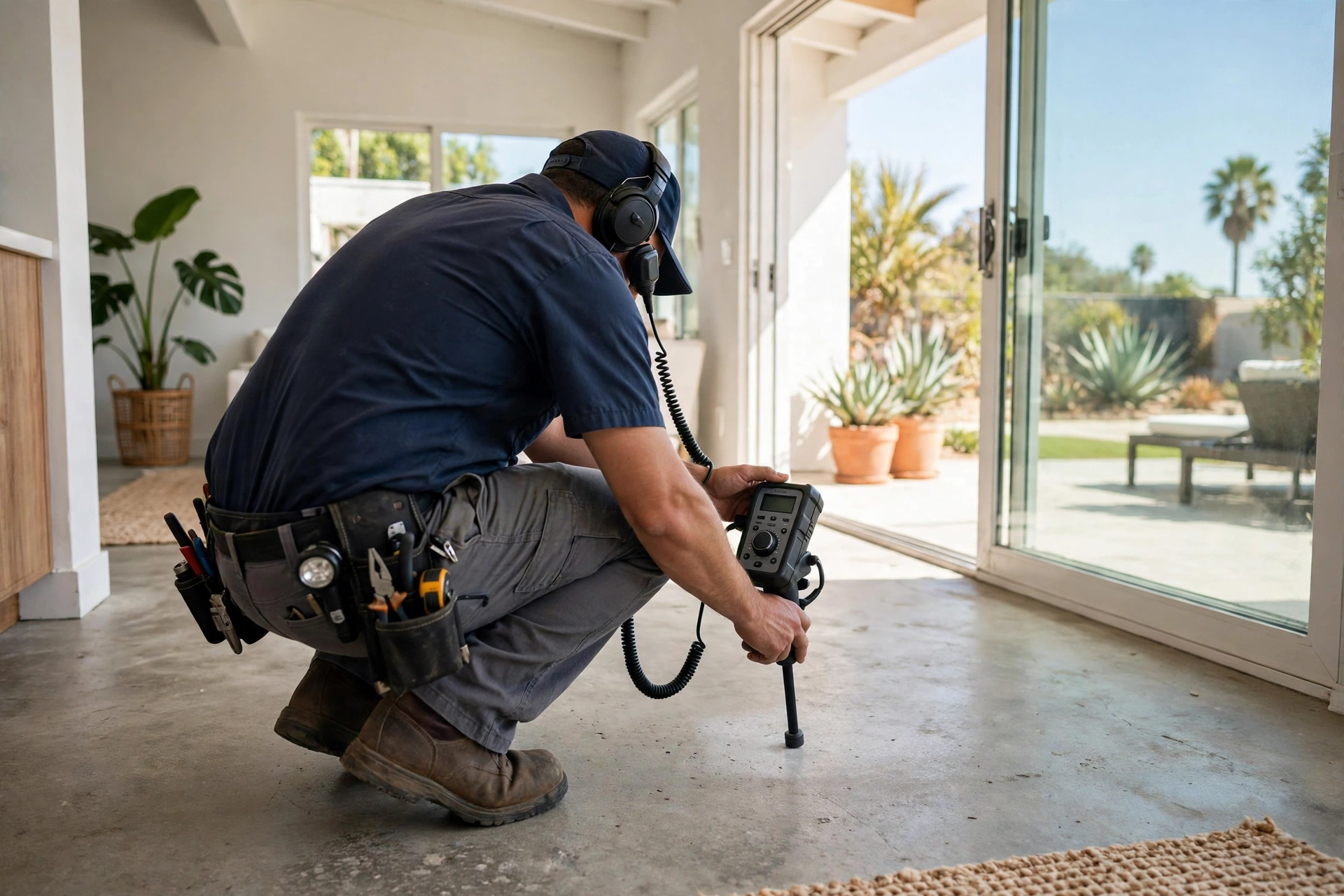
Acoustic listening equipment comes next. A sensitive microphone on the floor picks up the sound of water escaping the buried line, and the loudest point marks the break. Thermal cameras can help too, showing the warm patch on a hot water leak as a bright spot on the floor. Used together, these tools can pinpoint a leak within a small area, so the floor opens in the right place.
Once the leak is found, the repair options depend on where it sits and how old the lines are. A single accessible leak can be repaired in place, while a home with repeated slab leaks may be better served by rerouting the lines overhead, through the attic and walls, where they can be reached and watched. Either way, the goal is the same: stop the water, dry the slab, and keep the leak from coming back.
Related: slab leak repair, burst pipe repair in Newport Beach
Slab Leak Signs in Newport Beach Homes
Read the guide, then describe your burst pipe problem and request service.
Slab Leak Questions, Answered
Quick answers about spotting a slab leak early.
Often a warm patch on the floor, usually on the hot water side, or a cool damp spot that never dries. Tile may feel clammy, carpet may feel wet in one place, and laminate may cup or buckle above the leak.
Yes, and it often raises it a lot, because the leak runs day and night under the slab. A bill that jumps with no change in household use is one of the earliest signs.
Very urgent. Water under a slab erodes soil, settles concrete, damages flooring, and feeds mildew. The longer it runs, the more of the floor has to come up to fix it.
Sometimes. In a quiet house you may hear a faint hiss or trickle under the floor when every tap is off. Listening equipment can hear leaks that are far too quiet for the human ear.
Related Burst Pipe Guides
Pipe Insulation Guide for Newport Beach Homes
Pipe insulation is a sleeve of foam or fiberglass that wraps an exposed pipe and keeps cold air from chilling ...
Learn MoreWhat to Do When a Pipe Bursts in Newport Beach
When a pipe bursts, shut off the main water valve first, open the lowest faucet to drain the lines, and keep w...
Learn MoreHow to Shut Off Your Water Fast When a Pipe Bursts
To shut off your water fast, turn the main shutoff valve clockwise until the water stops, then open the lowest...
Learn MoreSlab Leak Signs in Newport Beach Homes
A slab leak is a leak in the water lines that run under your concrete foundation, and its signs are warm spots on the floor, damp carpet or flooring that never dries, a water bill that jumps with no change in use, and the sound of running water when every tap is off. Newport Beach homes with slab foundations and older copper lines are the most likely to see one. A slab leak never fixes itself, so early detection keeps a small repair from becoming a cracked slab and a torn up floor.
Get Help From a Local Specialist
Request service and a local burst pipe contractor will help.
Call Us
Emergency burst pipe help across Newport Beach.
Phone number to be decidedEmail Us
Send questions about a leak or repair.
Email address to be decidedVisit Us
Proudly serving Newport Beach and the Orange County coast.
Address to be confirmed