Pipe Insulation Guide for Newport Beach Homes
Newport Beach winters are gentle, and that is why they catch pipes off guard. Most of the year, nobody thinks about the copper run along the garage wall or the hose bib by the patio. Then one cold night arrives, the water inside an exposed pipe chills and stiffens, and the pipe cracks. The split often opens days later, when the weather warms and the water starts moving again.
Insulation is the simple answer, and it is a job most homeowners can do themselves in an afternoon. This guide covers which pipes need it first, which materials hold up outdoors near the coast, what to do on a cold night, and the mistakes that leave pipes unprotected even after you have done the work.
Which Pipes Need Insulation First
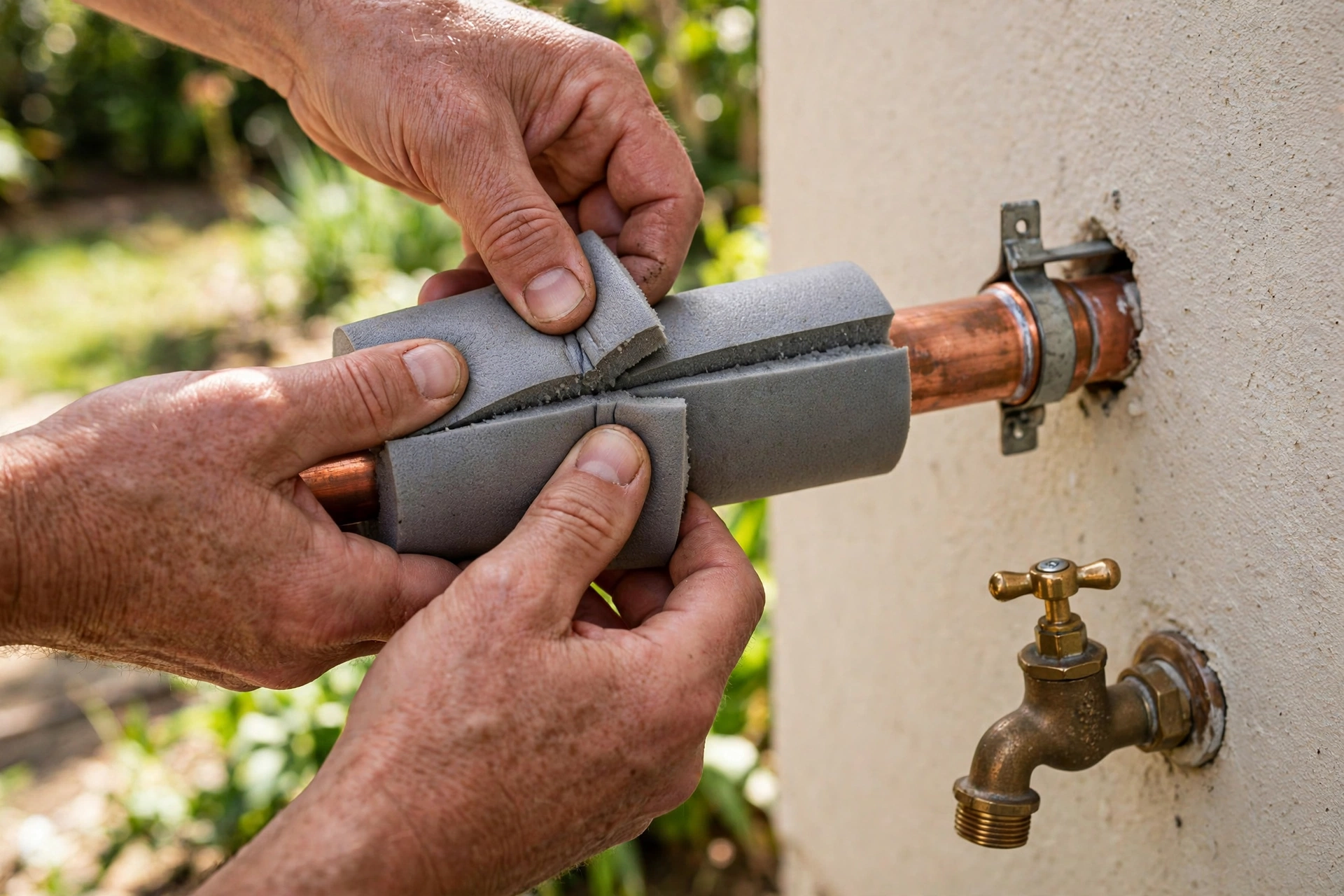
Start with the pipes you can see. Hose bibs, outdoor showers, pool equipment lines, and any copper run along an exterior wall are the most exposed, and they chill fastest on a cold night. The water line to a garage sink and the pipes in an open carport come next, because a garage door that stays open lets cold air straight onto bare pipe.
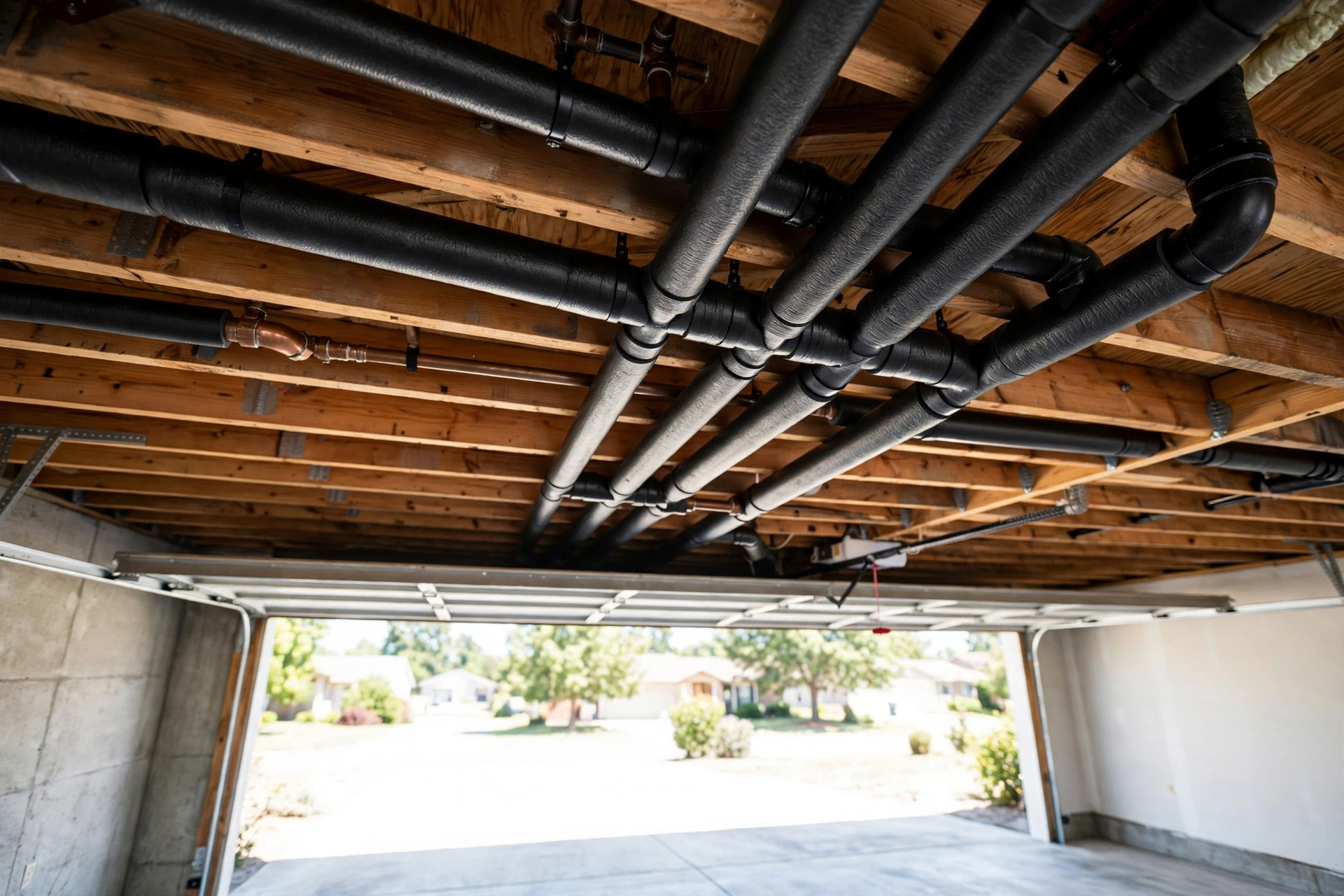
Then check the pipes you cannot see as easily. Pipes in an unheated garage, in a crawlspace with open vents, and in an attic near the eaves all sit in cold air, even when the house stays warm. In older homes around Corona del Mar and the Balboa Peninsula, water lines often run through these cold pockets, and a short exposed stretch is all it takes.
Hot water lines deserve insulation too, for a different reason. An insulated hot line keeps water warmer on its way to the tap, so you run less water waiting for it to heat up. Insulate both hot and cold runs while you are up there, and you protect the pipes and trim the wait at the tap in one pass. That shorter wait also means less water running down the drain while the shower warms up, which is a small daily saving that adds up across a household.
Related: pipe insulation and freeze protection, burst pipe repair in Corona del Mar
Pipe Insulation Guide for Newport Beach Homes
Read the guide, then describe your burst pipe problem and request service.
Insulation Materials That Work Outdoors
Foam sleeves are the workhorse of pipe insulation. They come as tubes that slip over the pipe, with a slit down one side that you tape closed after fitting. They are cheap, easy to cut with a knife, and they fit standard pipe sizes, which makes them the right choice for most garage and exterior runs.
Fiberglass wrap suits pipes with odd shapes and tight bends, where a rigid foam tube will not sit flat. Wrap it snugly around the pipe, overlap each turn, and tape the ends so it stays put. Outdoors, fiberglass needs a weatherproof cover over it, because wet fiberglass loses its insulating power and sags off the pipe.
Near the coast, pick materials that can handle damp, salty air. Closed cell foam holds up well outdoors, and a plastic or metal jacket over the insulation keeps rain and sun off it. Skip the thin foam made for indoor use on any run that faces the weather, and replace any sleeve that has cracked, torn, or gone soft with age.
Related: water line repair
Get Burst Pipe Help in Newport Beach Today
Tell us where the water is and request service anywhere in Newport Beach.
Cold Night Checklist for Homeowners
When a cold night is forecast, walk the house once before dark. Close the garage door, shut crawlspace vents that face the wind, and cover every hose bib with an insulated cover or a wrapped towel held on with tape. Disconnect garden hoses and drain them, because a hose full of water can back pressure into the bib behind it.
Inside, open the cabinet doors under sinks on exterior walls so warm room air can reach the pipes behind them. Let the taps on those sinks drip slowly overnight, because moving water resists chilling far better than still water. Keep the heat on, even if you are away for the night, and set it to hold the house steady rather than letting it drop.
In the morning, check the outdoor taps and the garage pipes before you turn anything on full. If a tap gives only a trickle, a pipe may have chilled shut, so leave the tap open a little and warm the pipe gently with a hair dryer or warm towels. Never use an open flame on a pipe, and if the pipe has split, shut off the main valve and request help right away.
Related: emergency burst pipe repair
Burst Pipe Repair Across the Orange County Coast
A local contractor can take your burst pipe request today.
Insulation Mistakes to Avoid
The most common mistake is insulating most of a run and leaving a gap. A short bare stretch at a joint, a valve, or a bend is where cold air finds the pipe, and it is where the crack will open. Insulate the whole run, including fittings and valves, and tape every seam so no bare metal shows.
Another mistake is using indoor foam on an outdoor pipe. Indoor sleeves break down in sun and rain, and within a season they can split and fall away, leaving the pipe bare for the next cold snap. Match the material to the location, and check outdoor insulation each autumn to catch damage before winter arrives.
The last mistake is insulating the pipe and ignoring the wall around it. A pipe that runs through a drafty gap in an exterior wall will chill no matter how well it is wrapped, because cold air pours through the gap. Seal the gap with caulk or foam, insulate the pipe, and the line stays protected on both counts.
Related: pipe insulation and freeze protection, burst pipe repair in Newport Beach
Pipe Insulation Guide for Newport Beach Homes
Read the guide, then describe your burst pipe problem and request service.
Pipe Insulation Questions, Answered
Quick answers about winter pipe protection.
Yes, on exposed pipes. Winters are mild, but a single cold night can crack an unprotected hose bib, pool line, or garage pipe, and the split often opens days later.
Closed cell foam sleeves with a weatherproof jacket hold up best near the coast. Fiberglass wrap works on bends and odd shapes, but it needs a waterproof cover outdoors.
Cover hose bibs, disconnect and drain hoses, close the garage door, open cabinet doors on exterior walls, and let those taps drip slowly overnight while the heat stays on.
Before the cold season, in the autumn, while the weather is still mild. Check outdoor insulation each year and replace any sleeve that has cracked or gone soft.
Related Burst Pipe Guides
Burst Pipe Insurance Claims: A Homeowner Guide
A burst pipe insurance claim starts with stopping the water, photographing everything before you clean, and ke...
Learn MoreWhy Pipes Burst in Coastal Newport Beach Homes
Pipes in coastal Newport Beach homes burst most often because salt air corrodes copper from the outside, high ...
Learn MoreSlab Leak Signs in Newport Beach Homes
A slab leak is a leak in the water lines that run under your concrete foundation, and its signs are warm spots...
Learn MorePipe Insulation Guide for Newport Beach Homes
Pipe insulation is a sleeve of foam or fiberglass that wraps an exposed pipe and keeps cold air from chilling the water inside it. In Newport Beach it belongs on hose bibs, pool lines, outdoor showers, and any pipe in a garage or along an exterior wall, because a single cold night can crack an unprotected line. Insulating takes an afternoon, needs no special tools, and is the cheapest way to stop a winter burst before it happens.
Get Help From a Local Specialist
Request service and a local burst pipe contractor will help.
Call Us
Emergency burst pipe help across Newport Beach.
Phone number to be decidedEmail Us
Send questions about a leak or repair.
Email address to be decidedVisit Us
Proudly serving Newport Beach and the Orange County coast.
Address to be confirmed