Pipe Repair and Leak Help Across Irvine Villages
Irvine is one of the largest master planned communities in the country, and its villages were built in waves from the 1970s onward. Woodbridge, with its lakes and townhomes, Turtle Rock, set against the hills, Northwood, with its wide streets and older tract homes, and University Park, near the university, each have their own housing stock, but they share a common pattern: tract homes on concrete slabs, built to a plan, with plumbing runs laid out the same way across dozens of houses on a street. The newer villages around the Great Park follow the same pattern with newer materials. The villages were built to a plan, and the plumbing was laid out to the same plan, so a leak in one home is often a warning for the same model a few doors down, and a homeowner who watches for the same signs can act before the pipe fails.
Serving Irvine, CA 92614
That planned layout makes Irvine plumbing predictable, and it also makes its failures predictable. A slab leak in one Woodbridge townhome is often repeated in the same model a few doors down, because the same pipe run sits in the same place. Long runs under a slab hide pinhole leaks, shared walls in townhomes spread a leak into a neighboring unit, and the sheer number of fixtures in a larger tract home means more joints that can fail. This page covers how those patterns play out across Irvine villages, what to do when a pipe bursts, and how detection, repair, and repiping work in a master planned city. A homeowner who knows the age of the pipe in a Woodbridge townhome, and the place where the main valve sits in the utility closet, can act fast when a leak appears, and that speed matters most where a leak in a shared wall can reach a neighbor.
How Irvine Tract Homes Hide Pipe Problems
A tract home hides its plumbing well. The supply lines run under the slab, inside shared walls, and through attics that are hard to reach, so a leak can run for weeks before it shows up as a visible stain. In a townhome, the leak may show up in a neighbor's unit before it shows up in your own, because water follows the path of least resistance through a shared wall. In a single family home, the first sign is often a warm spot on the floor, a tile that loosens, or a patch of carpet that stays damp. A slab leak in a tract home can stay hidden for weeks, because the water seeps into the soil below the floor rather than pooling where it can be seen, and the water bill is often the first clue that something is wrong.
The slab is the main reason leaks stay hidden in Irvine. Copper runs under concrete are protected from view, and a pinhole in one of those runs seeps into the soil below the floor. The water bill is often the first clue, because the leak runs day and night, and the bill climbs even when the household uses water normally. A water heater that cycles more often than it used to is a second clue, because it is heating water that is leaking away under the floor.
Age matters even in a planned city. The oldest Irvine villages date to the 1970s, and their original copper runs are now decades old. Hard water in the area leaves scale inside those runs, which narrows the opening and raises pressure, and the combination of age, scale, and pressure is what turns a pinhole into a burst. Newer villages have newer pipe, but they also have longer runs and more fixtures, so the risk is different, not gone.
Related: slab leak repair, burst pipe leak detection

Slab Leaks in Master Planned Neighborhoods
A slab leak in Irvine is a pinhole in a copper run under the concrete floor, and it is one of the most common hidden problems in the city. The signs are subtle at first: a warm spot on the floor where a hot water line is leaking, a damp patch on a rug that never dries, or a floor that sounds hollow when you walk across it. In a townhome, the dampness may appear on the other side of a shared wall, which makes the source harder to pin down.
Detection is what keeps a slab leak from turning into a major repair. Listening equipment follows the sound of escaping water to a small area, a pressure test shows which run is losing water, and a thermal check finds the warm spot left by a hot line. Each step narrows the search, so only a small section of floor has to be opened, or the run can be rerouted through the attic and the slab left alone. The choice depends on where the leak sits and how much of the old pipe is still sound.
Once a slab leak is found, the repair is often a chance to fix a wider problem. If the same model of home on the same street has had more than one slab leak, the other runs in the house are likely to follow, and a repipe through the attic can replace them all at once. That is a bigger job than a single patch, but it ends the cycle of leaks that comes with aging slab runs.
Related: slab leak repair, repiping an older home
What Irvine Homeowners Should Do First After a Burst
When a pipe bursts in an Irvine home, start at the main shutoff valve. In most tract homes it sits in the garage, near the front of the house, or at the meter by the street, and in townhomes and condos it may be in a utility closet or near the water heater. Turn it off, then open the lowest faucet in the house so the lines drain and the pressure drops. That one step can keep a burst from soaking an entire floor.
Next, keep water away from anything electrical and move what you can out of the wet area. Do not step into standing water near outlets or appliances, and switch off power to any room where water has reached the walls. Move rugs, books, and low furniture, put towels or a bucket under a ceiling drip, and take photos of the damage as you go. If you live in a townhome, let the neighboring unit know, because a leak in a shared wall can reach them too.
Then request emergency service and describe what you see: where the water is coming from, which rooms are wet, and whether the main valve is off. A burst in an accessible run can often be repaired in one visit, while a burst under a slab or inside a shared wall takes longer to reach. Either way, the sooner the water is off, the smaller the repair and the cleanup will be.
Related: emergency burst pipe repair, burst pipe cleanup and water damage
Repiping and Pipe Upgrades in HOA Communities
Many Irvine neighborhoods are run by a homeowners association, and that changes how a repipe is planned. The association may have rules about work hours, about access to shared walls, and about how the outside of the home looks when the work is done. Before a repipe starts, it is worth checking those rules, so the work can be scheduled in a way that fits the community and does not catch anyone by surprise.
A repipe in an Irvine tract home is usually planned around the attic. New runs go through the attic to reach bathrooms and kitchens, which avoids opening the slab and keeps the work inside the house. The work is done in stages so the house is not without water overnight, and the new runs are laid out to avoid the long slab routes that caused the old leaks. Shutoff valves are added at each fixture, and a pressure regulator is added at the main line if the pressure has been running high.
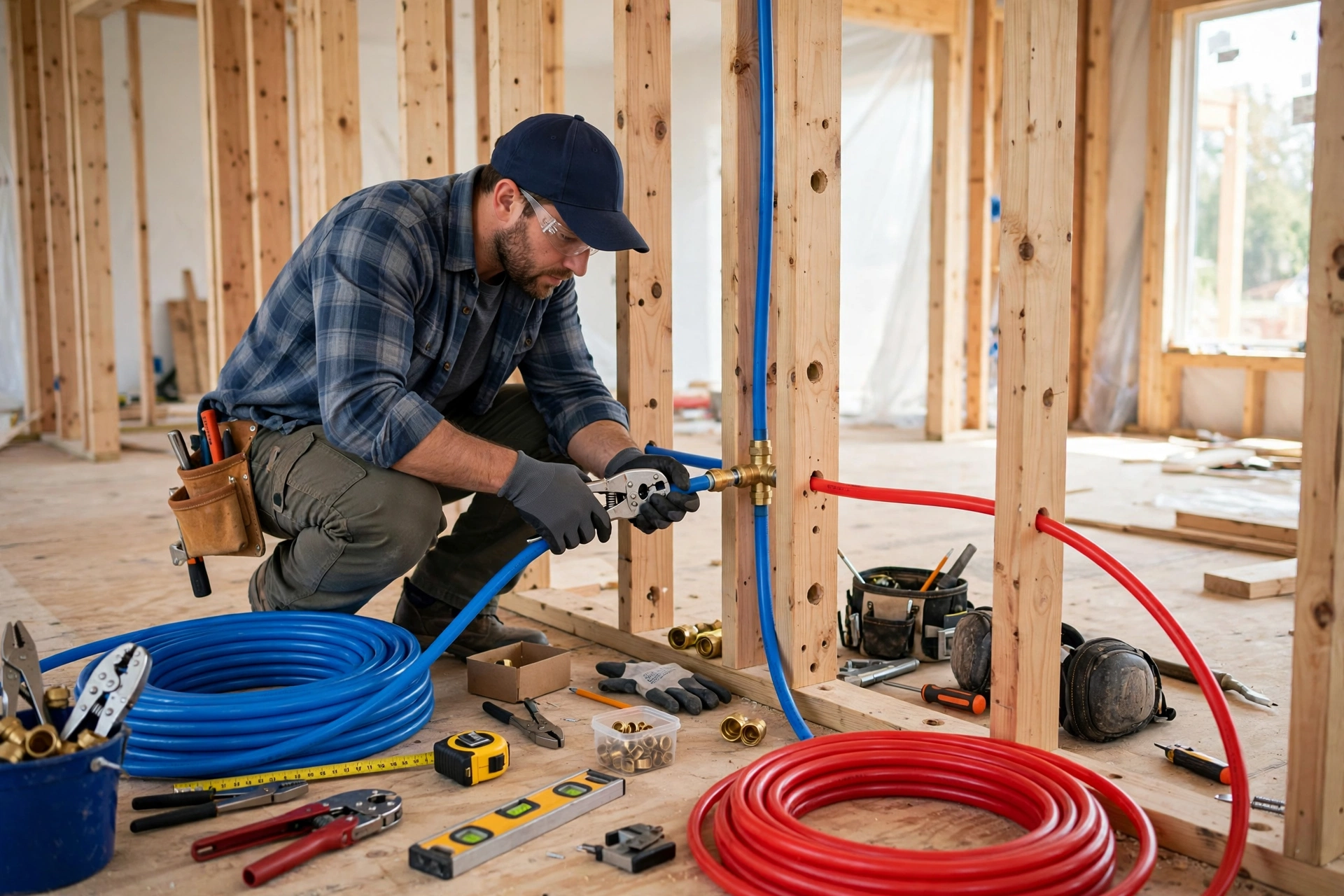
Material choice in a repipe comes down to the house and the layout. Copper is a familiar choice that holds up well when it is protected, and PEX tubing resists corrosion and scale, and it flexes through the tight spaces in a tract home. Many repipes use a mix, with copper where it is visible and protected, and PEX where runs have to thread through an attic or a shared wall. The right choice depends on the condition of the existing pipe and the layout of the home.
Related: whole house repiping, copper pipe repair
A Practical Pipe Care Plan for Irvine Homes
Irvine homes do not need constant attention, but they do need a regular routine. Once a year, walk the exposed pipe in the garage, look for green corrosion on copper fittings, and check under every sink for dampness or a musty smell. Look at the supply lines to toilets and washing machines, which are the most common small leaks in any home, and check the water heater connections, which wear out faster when pressure runs high.
In an Irvine village, the meter check is worth doing with the whole household in mind. Pick a quiet evening when no laundry or dishwasher is running, turn off every tap, and watch the dial. In a townhome, a leak in a shared wall can show up on your meter while the dampness appears next door, so a moving dial is worth acting on even if your own floors look dry.
Finally, know your house before an emergency arrives. Find the main shutoff valve, make sure it turns freely, and show everyone in the household where it is. If you live in a townhome, know which walls are shared and who to tell if a leak appears. A little preparation keeps a burst in Irvine from turning into a flood that reaches more than one home.
Related: water line repair, pipe insulation and freeze protection
How an Irvine Slab Leak Repair Is Planned
A slab leak repair in Irvine is planned around the tract layout of the home. The technician starts by finding the leak, using listening equipment, a pressure test, and a thermal check to narrow the search to a small area. That matters in a tract home, because the same pipe layout repeats across a street, and the leak in your house may sit in the same place as the leak in the same model a few doors down.
Once the leak is found, there are two main choices. The first is to open a small section of floor above the leak, cut out the damaged pipe, and replace it. The second is to leave the slab alone and reroute the run through the attic, which replaces the whole aging run at once. The reroute is a bigger job, but it ends the cycle of leaks that comes with aging slab runs, and it is often the better choice when the same model has had more than one slab leak.
In a townhome, the plan has to consider the shared wall as well. A leak in a shared wall can reach the neighboring unit, so the repair is scheduled in a way that keeps the neighbor informed and the shared wall intact. The work is done in stages so the house is not without water overnight, and the new runs are laid out to avoid the long slab routes that caused the old leaks.
Related: slab leak repair, repiping an older home
Fixture Supply Lines in a Tract Home
The supply lines to toilets, washing machines, and kitchen taps are the most common small leaks in an Irvine tract home, and they are also the easiest to spot. Those lines are short, they sit in plain view under a sink or behind a toilet, and they wear out faster than the pipe in the walls, because they flex every time a fixture is used. A damp spot under a sink, a supply line that feels stiff or swollen, or a shutoff valve that drips when it is turned are all signs that a line is ready to be replaced.
In a larger tract home, there are more of those lines than in a small cottage, so a yearly check of every fixture is worth the time. Look under every sink, behind every toilet, and at the washing machine connections, and check the shutoff valves as well. A valve that will not turn, or that drips when it is closed, is a valve that will not help you in an emergency, and replacing it now is far easier than replacing it during a burst.
Those small lines are also a good place to start when a home is being repiped. A repipe that replaces the main runs but leaves old supply lines in place has left the most common leak in the house untouched. Replacing the supply lines at the same time, and adding a shutoff valve at each fixture, makes the new system easier to live with and easier to shut off when a leak appears.
Related: water line repair, whole house repiping, burst pipe repair in Costa Mesa, burst pipe repair in Newport Beach, burst pipe repair in Santa Ana
Burst Pipe Questions in Irvine, Answered
Not seeing your question? Request service and tell us what is happening.
Most Irvine homes are tract built on slabs, so a pinhole in a copper run under the floor can seep for weeks before it is found. Hard water leaves scale inside the pipe, which narrows the opening and raises pressure, and aging runs in the older villages are now decades old.
In an Irvine tract home, the main valve is usually in the garage or at the meter, and in a Woodbridge townhome it may sit in a utility closet near the water heater. Turn it off, open a ground floor tap, and keep clear of outlets while the lines drain. Then request emergency service, and mention the village and the model of home if you know it, because the same pipe layout repeats across a street and that helps narrow the search.
Yes. Service covers Irvine including Woodbridge, Turtle Rock, Northwood, University Park, and the newer neighborhoods around the Great Park, as well as the villages in between.
Yes. Tract homes on slabs with copper runs underneath are the classic setting for a slab leak, and the same pipe layout repeats across a street, so one home with a leak often means the neighbors should watch for the same signs.
It is worth checking your association rules before work starts, because many Irvine associations have rules about work hours, access to shared walls, and the outside of the home. A repipe can usually be planned to fit those rules without much trouble.
Tract homes on a street share the same model and the same pipe layout, so the same run sits in the same place in house after house. When one home has a slab leak, the neighbors with the same model and the same age of pipe should watch for the same signs, because their runs are wearing out on the same schedule.
Nearby Towns and Cities
Newport Beach
Burst pipe repair in Newport Beach covers emergency pipe fixes, leak detection, copper repair, and repiping ac...
View Services in Newport BeachCorona del Mar
Burst pipe repair in Corona del Mar covers emergency pipe fixes, leak detection, copper repair, and repiping f...
View Services in Corona del MarBalboa Island
Burst pipe repair on Balboa Island covers emergency pipe fixes, leak detection, copper repair, and repiping fo...
View Services in Balboa IslandBurst Pipe Repair in Irvine
Burst pipe repair in Irvine covers emergency pipe fixes, leak detection, slab leak repair, and repiping across the villages of Woodbridge, Turtle Rock, Northwood, University Park, and the newer neighborhoods around the Great Park. Irvine is a master planned city, so most homes are tract built on slabs, with long pipe runs hidden under concrete floors and inside shared walls. A leak in one of those runs can stay hidden for weeks, and a burst often shows up first as a warm spot on the floor or a water bill that climbs for no clear reason. Request service as soon as you see damp flooring, hear water running when every tap is off, or notice pressure dropping across the house.
Get Help From a Local Specialist
Request service and a local burst pipe contractor will help.
Call Us
Emergency burst pipe help across Newport Beach.
Phone number to be decidedEmail Us
Send questions about a leak or repair.
Email address to be decidedVisit Us
Proudly serving Newport Beach and the Orange County coast.
Address to be confirmed