Burst Pipe Leak Detection in Newport Beach, CA
A pipe can leak for weeks before anyone in the house notices. Water follows the path of least resistance, running along framing, pooling under flooring, and soaking into drywall far from the actual break. By the time a stain appears on a ceiling or a baseboard starts to swell, the leak has often been active long enough to warp wood, feed mold, and weaken the structure around it. In Newport Beach, where many homes have copper supply lines that have been in service for decades and slab foundations that hide the pipes completely, a hidden leak is a common and costly surprise.
Leak detection finds the break before the damage spreads. A technician works through the house with acoustic listening gear, pressure gauges, and thermal cameras, narrowing the search from a whole room to a single point in a wall or slab. This page explains the signs that point to a hidden leak, how detection works, why coastal homes are prone to concealed breaks, and what happens once the leak is found.
Signs of a Hidden Burst Pipe in Your Home
The most reliable early sign is water where it should not be, even in small amounts. Look for damp spots on walls and ceilings, baseboards that pull away from the wall, flooring that buckles or feels spongy, and paint that bubbles or peels for no clear reason. A patch of carpet that stays damp, a musty smell in one room, and the sound of running water when every tap is off all point to a leak hiding out of sight.
Your water meter can confirm the suspicion. Turn off every tap and appliance that uses water, then watch the meter. If the dial keeps moving, water is leaving the system somewhere, and a hidden leak is the likely cause. A hot water line leak often warms a section of floor, while a cold line leak may show up as a cool, damp patch. Either way, the sooner the break is located, the smaller the repair and the drying job that follows.
- Damp spots, bubbling paint, or swollen baseboards
- Flooring that buckles, warps, or feels spongy underfoot
- A musty smell in one room that never clears
- The sound of running water with every tap off
- A water meter that keeps moving with all water off
- A warm or cool patch on the floor with no clear cause
Related: emergency burst pipe repair, burst pipe repair in Newport Beach
How Leak Detection Finds the Break
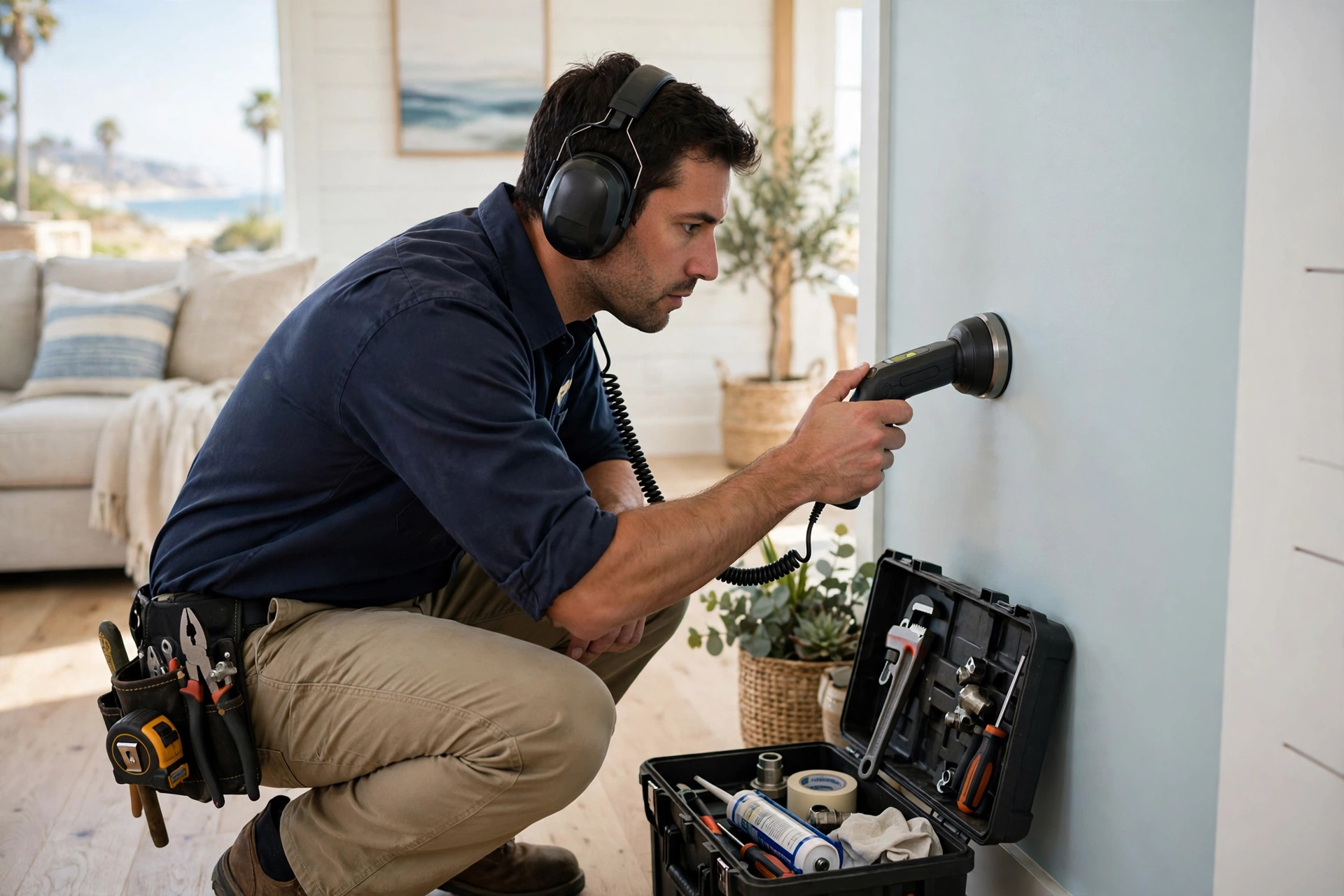
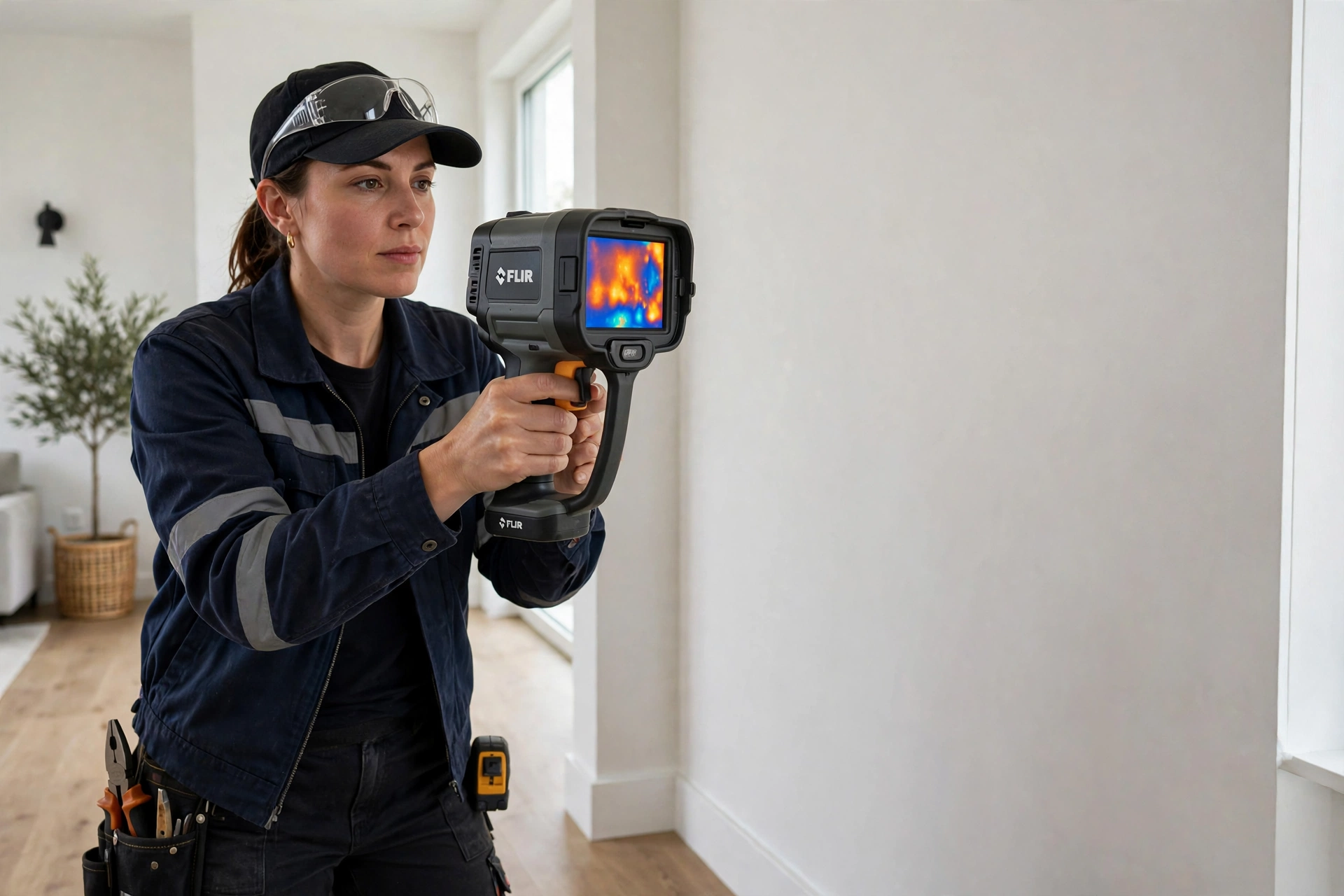
Detection starts with narrowing the search. The technician isolates sections of the system with shutoff valves and watches pressure gauges to learn which run is losing water. Once the leaking run is known, acoustic listening equipment picks up the hiss of water escaping under pressure, and the sound grows louder as the sensor moves closer to the break. Thermal imaging adds a second view, showing warm or cool patterns on a wall or floor where leaking water has changed the surface temperature.
For leaks under a slab, the process adds electronic amplification and sometimes a harmless tracer gas that escapes through the break and is picked up by a sniffer at the surface. The goal is always the same: mark one spot, not a whole room. A precise location means the repair crew opens a small section of wall, floor, or concrete, fixes the pipe, and leaves the rest of the home untouched.
Related: slab leak repair, copper pipe repair
Why Hidden Leaks Cause So Much Damage in Coastal Homes
Salt air and age work together on Newport Beach plumbing. Copper supply lines in older homes near the harbor and the bay have spent decades carrying water through walls and slabs, and corrosion thins them from the inside until a pinhole opens. The leak starts as a fine spray inside a wall cavity, and because the water is trapped, it soaks insulation, framing, and drywall before any of it reaches a visible surface.
Slab foundations add to the problem. Many Newport Beach homes sit on concrete slabs with water lines buried beneath, so a leak under the slab has nowhere to go except up through the concrete and into the flooring. Warm spots on tile, damp carpet near an interior wall, and cracks that appear in a slab floor are all signs that a buried line has failed. Finding these leaks early matters because water under a slab can erode the soil that supports the foundation.
Related: water line repair, plumbing repair on Balboa Island
What Happens After a Leak Is Found
Once the break is marked, the repair is planned around the smallest opening that gives access to the pipe. A wall leak usually means removing a small square of drywall. A slab leak may be fixed by opening the concrete at the marked spot, or by rerouting the line overhead through the attic so the slab never has to be broken open. The technician explains both paths, then replaces the damaged section and pressure tests the run before the water comes back on.
After the pipe is fixed, the wet materials need attention. Damp drywall, soaked insulation, and wet flooring should be dried out quickly, because mold can start growing in damp building materials within a couple of days. The detection visit ends with a clear report of where the leak was, what caused it, what was replaced, and which nearby runs should be watched, so the same problem does not return in the next room over.
Related: burst pipe cleanup and water damage, leak detection in Corona del Mar
How to Check for a Hidden Leak Yourself
Before you request a detection visit, a simple meter test can confirm that a leak exists. Turn off every tap, the washing machine, the dishwasher, and any irrigation, then look at the water meter. Note the reading, wait for an hour without using any water, and read it again. If the numbers have moved, water is leaving the system somewhere, and a hidden leak is the likely cause. A meter with a small leak indicator dial makes the test even easier, since the dial spins with even a tiny flow.
Your senses can narrow the search while you wait. Walk the house at night when it is quiet and listen at the walls in the rooms where you suspect a leak. A faint hiss or the sound of trickling water behind drywall is a strong clue. Feel the floors for warm or damp patches, look under sinks for moisture or green staining on copper, and check the water heater area for puddles or rust colored water at the base.
Compare your recent water bills with the same months in earlier years, allowing for changes in household size and garden watering. A steady climb with no change in habits points to a leak that runs around the clock. Also watch the toilet tanks, since a running toilet can mimic a leak on the meter. Put a few drops of food coloring in the tank and wait. If the color appears in the bowl without a flush, the flapper is leaking and the toilet is the culprit, not a pipe.
A homeowner check can confirm a leak, but it rarely finds the exact break, and opening walls on a guess usually creates more repair work than the leak itself. When the meter test points to a leak and your own checks cannot find it, that is the point to request professional detection. The equipment narrows the search to one marked spot, so the repair opens a small area and the rest of the home stays intact.
- Turn off all water and watch the meter for an hour
- Listen at walls at night for hissing or trickling
- Feel floors for warm or damp patches
- Check under sinks for moisture and green staining
- Test toilets with food coloring in the tank
Related: emergency burst pipe repair, slab leak repair
Burst Pipe Leak Detection Questions, Answered
Not seeing your question? Request service and describe what is happening.
Acoustic listening equipment picks up the sound of water escaping under pressure, and thermal imaging shows temperature changes on the wall surface where leaking water has soaked through. Pressure testing first narrows the search to one pipe run, so the search stays focused.
Most detection visits take a few hours, depending on how many pipe runs must be tested and how well the leak is hidden. A leak in an open wall is found faster than one buried under a slab, which needs more listening and testing to pinpoint.
Damp spots, bubbling paint, swollen baseboards, warped flooring, a musty smell, the sound of running water with all taps off, and a water meter that moves when nothing is using water. A warm patch on the floor often points to a hot water line leak.
Yes. A pinhole leak means the pipe wall has already thinned or cracked, and pressure keeps working on that weak spot. Left alone, the opening can widen until the pipe splits, turning a slow hidden leak into a sudden flood.
Detection itself does not damage anything. The equipment listens, measures, and images from the surface, and only the small area directly over the break is opened for the repair.
You can confirm a leak with a meter test by turning off all water and watching the dial for movement. Finding the exact break usually takes listening equipment and thermal imaging, so a professional visit pinpoints the spot without opening walls on a guess.
Related Burst Pipe Services
Emergency Burst Pipe Repair
A burst pipe in a Newport Beach home needs water shut off first, then a plumber to find the break, stop the fl...
Learn MoreCopper Pipe Repair
Copper has carried the water in most Newport Beach homes for decades, and near the coast it eventually corrode...
Learn MoreRepiping
Repiping replaces the pipe runs in a Newport Beach home that have corroded, leaked, or lost pressure, while le...
Learn MoreBurst Pipe Leak Detection in Newport Beach, CA
Hidden leaks behind walls, under floors, and inside concrete slabs rarely announce themselves with spraying water. Instead they show up as a damp patch, a musty smell, a warm spot on the floor, or a water bill that climbs while nothing in the house has changed. Burst pipe leak detection uses listening equipment, pressure testing, and thermal imaging to pinpoint the break, so the repair opens up one small area instead of tearing a room apart.
Get Help From a Local Specialist
Request service and a local burst pipe contractor will help.
Call Us
Emergency burst pipe help across Newport Beach.
Phone number to be decidedEmail Us
Send questions about a leak or repair.
Email address to be decidedVisit Us
Proudly serving Newport Beach and the Orange County coast.
Address to be confirmed