Pipe Insulation and Freeze Protection in Newport Beach
A coastal climate makes it easy to forget about freezing pipes. Most winter nights in Newport Beach stay mild, and the pipes inside the walls never see cold air. The risk lives in the pipes that run outside the heated envelope of the house: the lines in an unheated garage, the runs across a cold attic, the hose bibbs and pool equipment on an exterior wall, and the water line to a guest house or a detached laundry room. On the rare night when the temperature falls near freezing, those are the pipes that freeze first.
When water freezes it expands, and the ice pushes against the pipe wall until the metal or plastic splits. The break often stays hidden until the ice thaws, and then water pours out of the split while the homeowner is asleep or away. Pipe insulation and a few cold night habits stop that chain of events before it starts. This page covers which pipes need insulation, the materials that work best, and what to do when a cold night is coming.
Which Pipes Need Insulation in Newport Beach
Start with the pipes you can see. Walk the garage and look for copper or plastic runs along the walls and ceiling, especially the lines that feed the water heater, the laundry, and the hose bibbs. Check the attic for supply lines that cross open space, and walk the outside of the house for exposed runs, pool equipment lines, and the pipes that feed an outdoor kitchen or a detached structure. Any pipe that runs through unheated space is a candidate.
Hose bibbs deserve special attention because they sit on the cold side of the wall with water trapped inside. A foam cover over each bibb costs little and keeps the valve from freezing. The main water line where it enters the house is another key spot, along with any line that runs along a north facing exterior wall, which gets the least sun and stays coldest through a winter night.
- Supply lines in an unheated garage
- Pipes crossing a cold attic or crawl space
- Hose bibbs and outdoor kitchen lines
- Pool equipment and irrigation supply lines
- Pipes along north facing exterior walls
- Lines to a guest house or detached laundry room
Related: emergency burst pipe repair, pipe insulation in Newport Beach
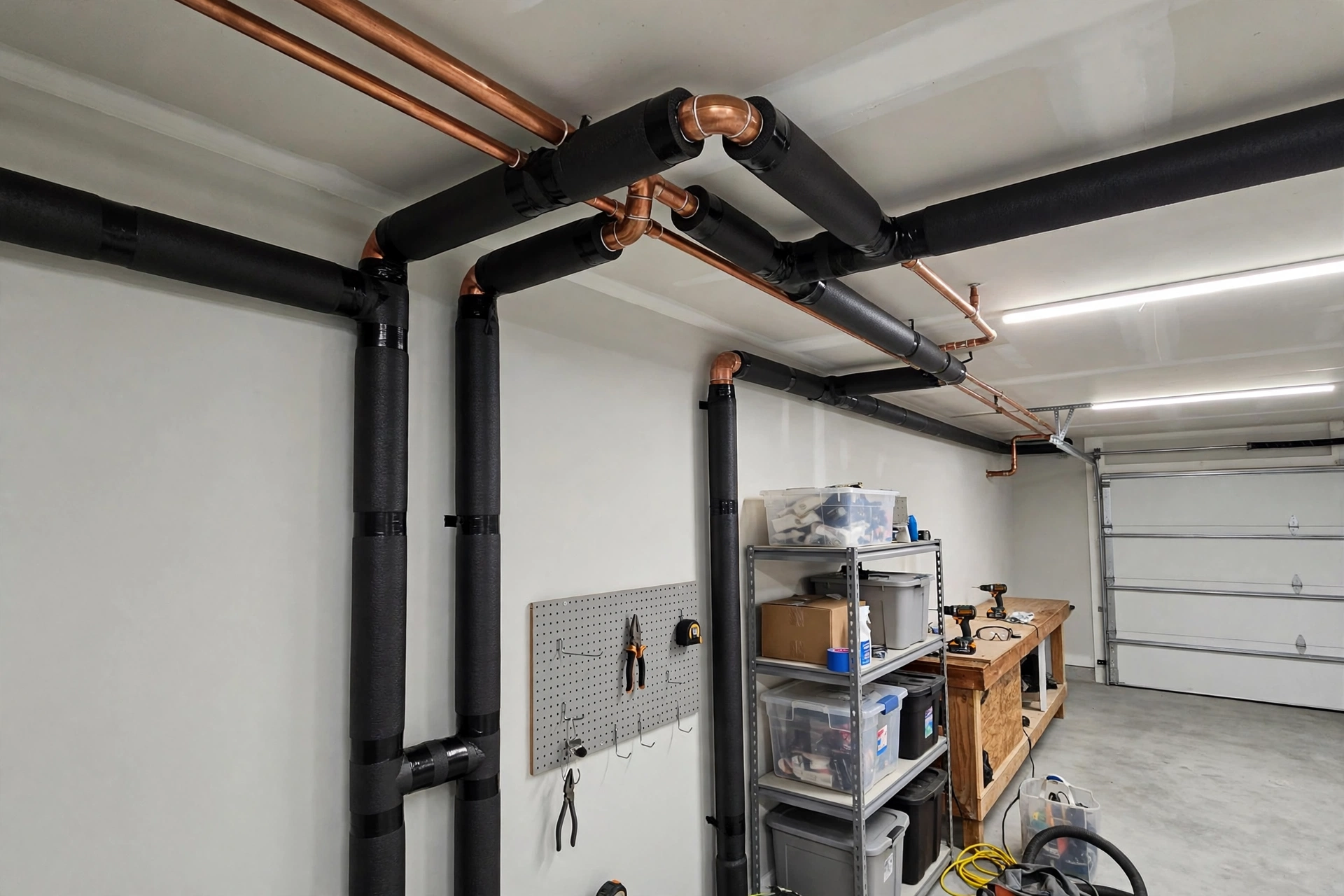
Insulation Options for Exposed Pipes
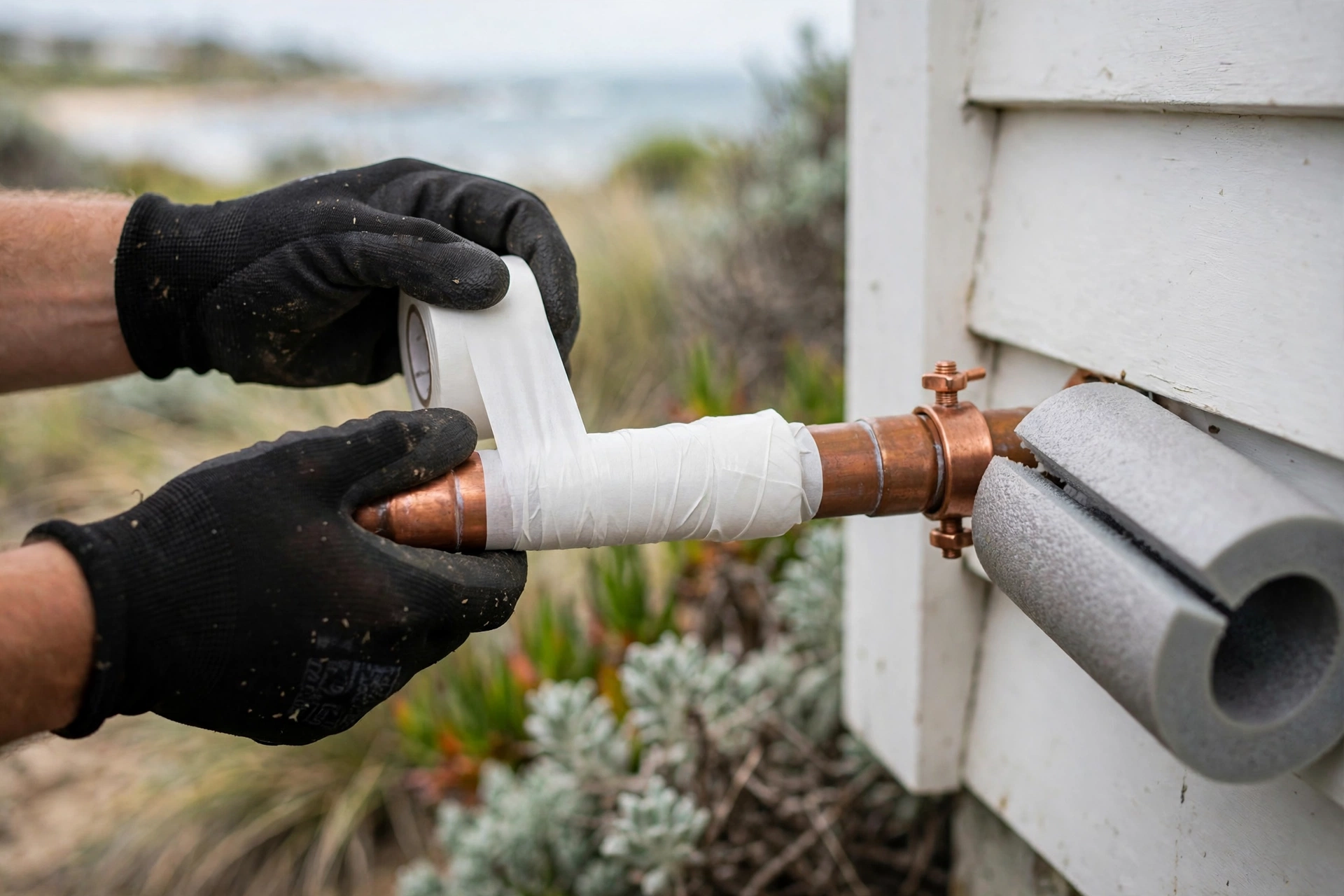
Foam pipe sleeves are the workhorse of pipe insulation. They come as tubes that slip over the pipe and seal along a slit, and they are sized to the pipe diameter so they fit snugly without gaps. The foam slows heat loss, which keeps the water inside above freezing for longer on a cold night. Sleeves work best on straight runs, and the joints between sleeves should be taped closed so no bare pipe is left showing.
For valves, bends, and short exposed sections, insulation tape and fitted covers fill the gaps that sleeves cannot reach. A heat cable is the stronger option for pipes that freeze every winter, since it adds a small amount of warmth along the run and is controlled by a thermostat that switches it on only in cold weather. A technician can match the material to the pipe, the location, and how often the cold reaches it, and can insulate the whole run so no section is left bare.
Related: water line repair, pipe insulation near Laguna Beach
Freeze Protection Tips for Cold Nights
On a night when freezing temperatures are forecast, a few simple steps protect the pipes that insulation alone may not save. Let a tap at the far end of the house drip slowly, because moving water freezes far more slowly than still water. Open the cabinet doors under kitchen and bathroom sinks on exterior walls, so warm room air reaches the pipes inside. Close the garage door and keep it closed through the night, and disconnect garden hoses so water cannot sit trapped in the bibb.
If the house will be empty during a cold spell, shut off the water at the main valve and drain the lines by opening the lowest faucet. An empty pipe cannot burst. For a home with a pool or an outdoor kitchen, drain those lines as well, and cover the equipment with an insulating blanket. These habits cost nothing and they protect the pipes that see the coldest air in the house.
Related: copper pipe repair, freeze protection near Costa Mesa
What to Do When an Exposed Pipe Freezes
A frozen pipe gives itself away when a tap opens and nothing comes out, or when only a trickle appears. Find the frozen section by feeling along the exposed run for the coldest spot, and look for frost on the outside of the pipe. Shut off the water at the main valve first, so that if the pipe has already split, the flood is contained when the ice thaws.
Thaw the pipe gently with warm towels, a hair dryer on a low setting, or a heat lamp held at a safe distance. Never use an open flame, and never leave a heat source unattended. Work from the tap end back toward the frozen section, so the melting water has somewhere to go. Once water flows again, watch the pipe closely for drips, because a split may only show itself after the ice is gone. If the pipe leaks, or if you cannot find the frozen section, request service and keep the water off until the pipe is checked.
Related: burst pipe leak detection, frozen pipe help on Balboa Island
Insulating Pipes in Attics and Crawl Spaces
Attics are the coldest part of many Newport Beach homes on a winter night. The space above the insulation sees the night air, and any supply line that crosses it is exposed to the cold for hours. Foam sleeves are the first step, fitted snugly along the whole run with taped joints. For a line that crosses a wide open attic, a second layer of protection helps, such as running the pipe through an insulated chase or laying loose insulation over the sleeved pipe so the cold air never touches it directly.
Crawl spaces bring a different problem, which is damp as well as cold. The ground below stays cool and moist, and a bare pipe in a crawl space loses heat to the air and the earth around it. Sleeves protect the pipe, but the crawl space itself deserves attention too. Sealing gaps in the foundation vents on cold nights, keeping the space dry, and making sure the insulation stays in place all help the pipes through the winter.
Gaps and joints are where attic and crawl space insulation fails. A sleeve that stops short of a fitting leaves a bare spot, and a bare spot is where the freeze starts. Every elbow, valve, and connection in an unheated space needs its own cover, whether that is tape, a fitted piece of foam, or a molded valve cover. A technician walking an attic or a crawl space will check every joint, because one bare fitting can undo a whole run of good insulation.
Heat cable is the stronger option for attic and crawl space runs that have frozen before. The cable runs along the pipe under the insulation and switches on only when the temperature drops, adding just enough warmth to keep the water moving. It needs a nearby outlet and a thermostat, and it should be installed so the cable never crosses over itself. For a pipe that freezes every winter despite sleeves, heat cable is the step that finally solves it.
- Sleeve every attic run and tape the joints closed
- Cover elbows, valves, and fittings, not just straight runs
- Seal foundation vents on cold nights
- Keep crawl spaces dry so insulation stays effective
- Add heat cable to runs that have frozen before
Pipe Insulation and Freeze Protection Questions, Answered
Not seeing your question? Request service and describe what is happening.
Rarely, but it happens on the coldest winter nights, and it only takes one freeze to split an exposed pipe. Pipes in unheated garages, attics, and on exterior walls are the ones at risk.
Start with exposed runs in the garage and attic, hose bibbs, pool equipment lines, and any pipe on a north facing exterior wall. These are the pipes that see the coldest air in the house.
Foam sleeves last for years when they are fitted snugly and taped at the joints. Sleeves in sunny spots wear faster, so check them each fall and replace any that have cracked or gone soft.
Let a far tap drip slowly, open cabinet doors under sinks on exterior walls, close the garage door, and disconnect garden hoses. If the house will be empty, shut off the water and drain the lines.
Insulation slows freezing and protects the pipe through most cold nights, but it cannot hold off a long hard freeze on its own. On the coldest nights, combine insulation with a dripping tap and warm air around the pipes.
Pipes inside heated interior walls rarely need insulation, since room heat keeps them warm. Focus on pipes in attics, crawl spaces, garages, and on exterior walls, where cold air reaches them.
Related Burst Pipe Services
Emergency Burst Pipe Repair
A burst pipe in a Newport Beach home needs water shut off first, then a plumber to find the break, stop the fl...
Learn MoreBurst Pipe Leak Detection
Hidden leaks behind walls, under floors, and inside concrete slabs rarely announce themselves with spraying wa...
Learn MoreCopper Pipe Repair
Copper has carried the water in most Newport Beach homes for decades, and near the coast it eventually corrode...
Learn MorePipe Insulation and Freeze Protection in Newport Beach, CA
Newport Beach rarely freezes, but the coldest winter nights can still drop low enough to freeze water in exposed pipes, and one frozen night is all it takes to split a pipe. Pipe insulation wraps those exposed runs in foam sleeves that hold in heat and slow the freeze, while simple habits like opening a cabinet door or letting a tap drip keep water moving on the coldest nights. Insulating the pipes in a garage, an attic, and along exterior walls is a small job that prevents a large flood.
Get Help From a Local Specialist
Request service and a local burst pipe contractor will help.
Call Us
Emergency burst pipe help across Newport Beach.
Phone number to be decidedEmail Us
Send questions about a leak or repair.
Email address to be decidedVisit Us
Proudly serving Newport Beach and the Orange County coast.
Address to be confirmed