Copper vs PEX Repiping for Coastal Newport Beach Homes
When a Newport Beach home starts bursting pipes again and again, the honest question is not how to patch the next one, but what the pipes should be made of. Two materials dominate that conversation: copper, which has plumbed Southern California homes for generations, and PEX, the flexible tubing that has become the standard for repiping in recent years.
Both materials can serve a coastal home well, and both can fail if they are installed in the wrong place. This guide compares copper and PEX the way a homeowner should: how each holds up to salt air, how each behaves in a repipe, what the work looks like day to day, and which one fits different kinds of homes around Newport Beach.
How Copper Holds Up Near the Coast
Copper has a lot going for it. It is rigid and strong, it handles hot water without complaint, it does not sag or stretch, and plumbers have worked with it for so long that every fitting and repair is familiar. A copper system that is installed well can serve a home for a very long time, and many Newport Beach homes still run on copper that was put in when the house was built.
Salt air is copper's weak point here. Ocean breeze settles on exposed runs and eats at the metal from the outside, leaving green crust at joints and thin spots that eventually split. Inside the pipe, water chemistry matters too: aggressive water can pit copper from within, and the first sign is often a pinhole leak that stains a wall or a ceiling before anyone notices it.
Copper also expands and contracts as hot water runs through it, and in tight walls that movement can wear on fittings over time. None of this makes copper a bad choice. It makes copper a choice that needs honest inspection, especially in harbor side homes where the air is saltiest and the plumbing is oldest.
Related: copper pipe repair
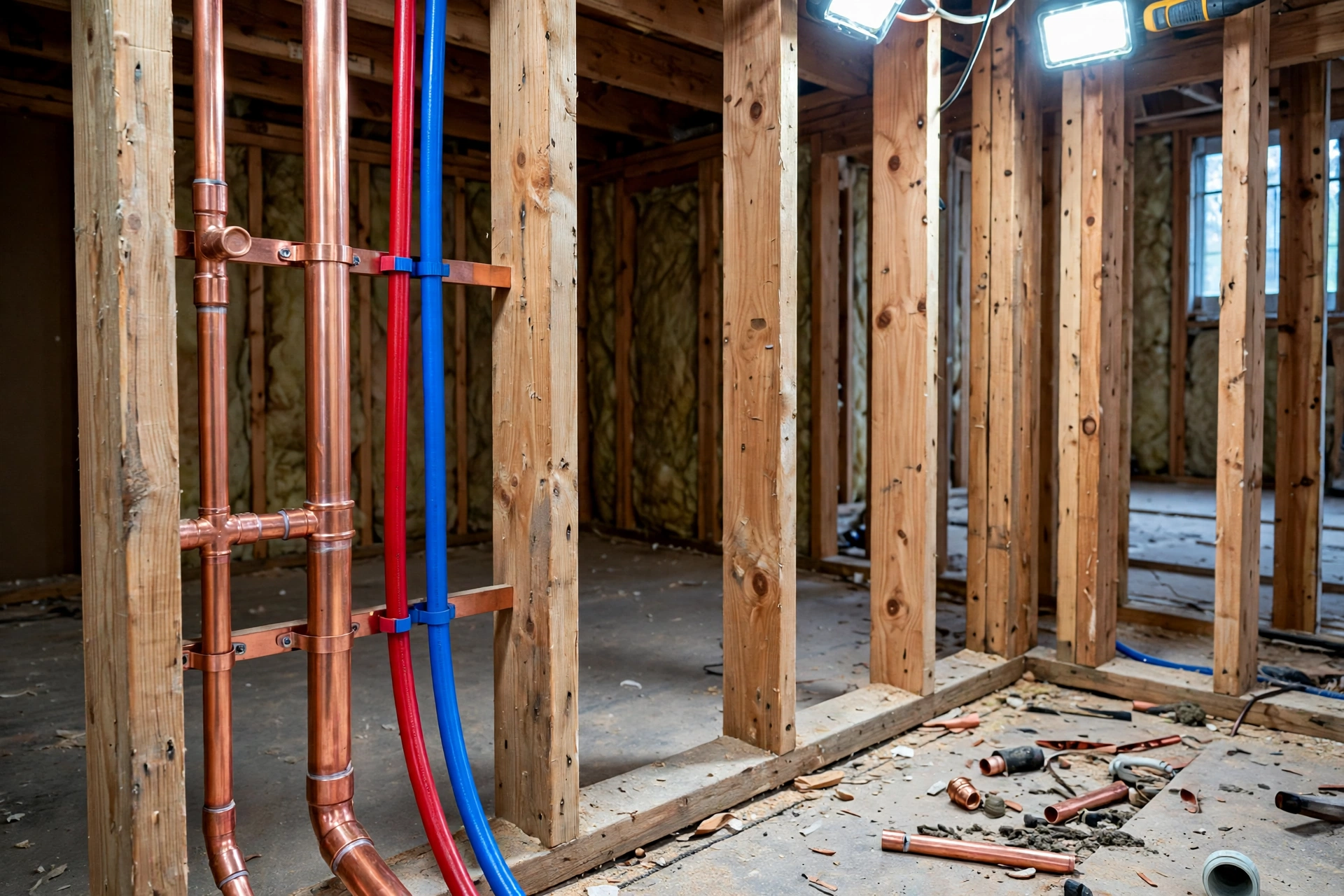
Copper vs PEX Repiping for Coastal Newport Beach Homes
Read the guide, then describe your burst pipe problem and request service.
Why Homeowners Choose PEX
PEX is flexible tubing that bends around corners, which means a repipe needs far fewer joints than copper. Fewer joints mean fewer places to leak, and the tubing itself does not corrode in salt air or build up scale inside the way metal pipe can. For a coastal home, that corrosion resistance is the main attraction.
PEX also handles cold better than rigid pipe. When water inside it chills, the tubing can flex a little instead of splitting, which matters on the cold nights that catch Newport Beach garages and exterior walls off guard. It runs quietly too, with no banging or ticking as hot water moves through it, and it keeps hot water hot a little longer on its way to the tap.
PEX is not perfect. It must stay out of sunlight, which breaks it down, so it belongs inside walls and attics, never on an exposed exterior run. It needs protection where rodents can reach it, and it must be installed with the right fittings and supports. Done right, though, it is a calm, quiet system that suits coastal repiping well.
Related: repiping services, whole house repiping
Get Burst Pipe Help in Newport Beach Today
Tell us where the water is and request service anywhere in Newport Beach.
What Repiping Work Looks Like Day to Day
A repipe is a bigger job than a single repair, and it helps to know what the days look like. A crew maps the existing pipe runs, opens small access points in walls and ceilings, and runs the new lines through attics, crawlspaces, and wall cavities. Water is usually off during work hours and back on in the evening, so the house stays livable through the job.
PEX repipes tend to move faster because the flexible tubing threads through tight spaces with fewer openings. Copper repipes take longer, since each run is cut, fitted, and soldered in place, and every joint needs room to work. Either way, expect dust, some drywall patches, and a few days when the house feels like a work site.
The finish matters as much as the pipe. Access points get patched, textured, and painted to match, and the new system gets pressure tested before the crew leaves. Ask how the walls will be restored, where the new lines will run, and what happens if a hidden problem turns up mid job. A clear plan before the first wall opens keeps the whole project calm.
Related: whole house repiping, burst pipe repair in Huntington Beach
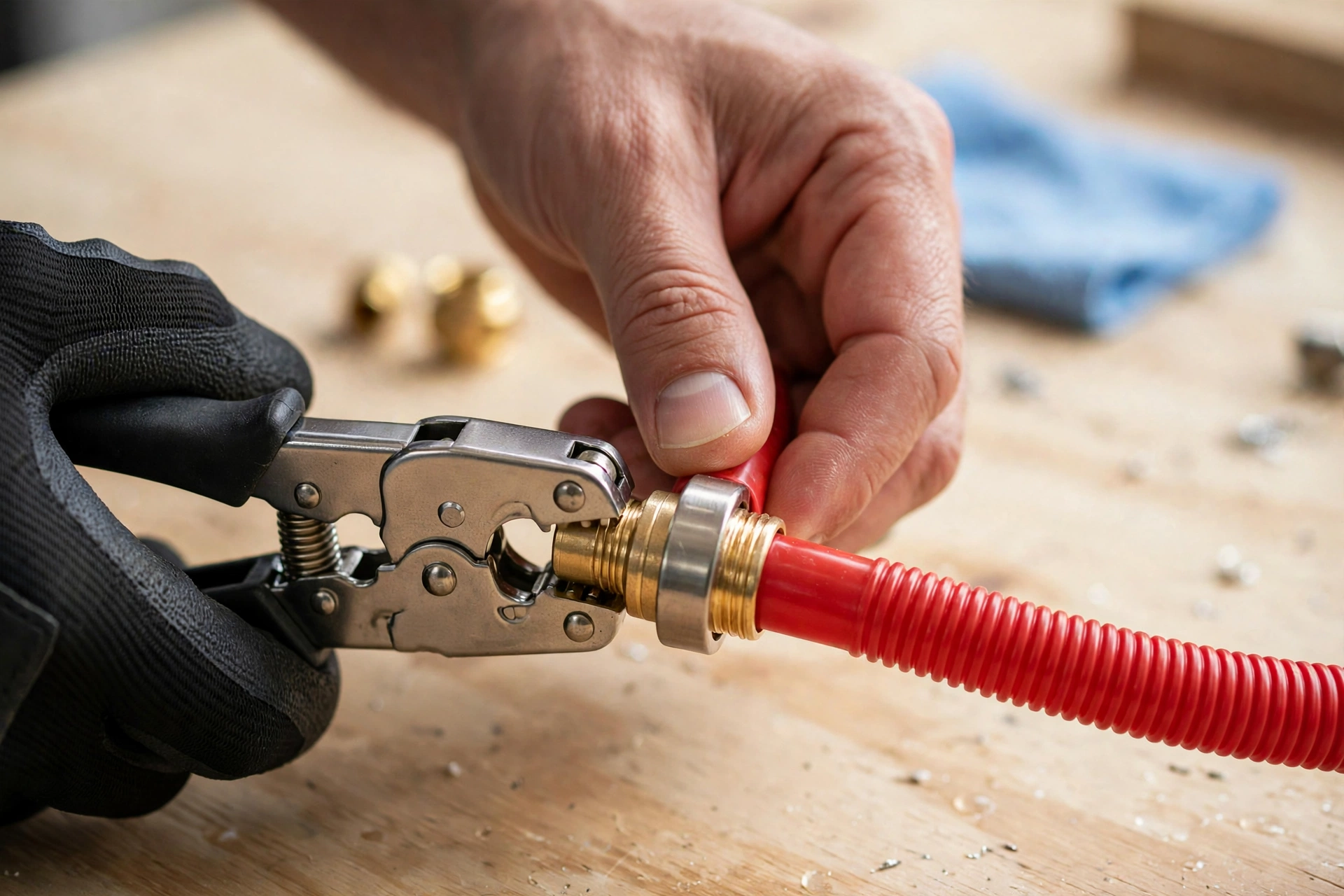
Burst Pipe Repair Across the Orange County Coast
A local contractor can take your burst pipe request today.
Which Material Fits Your Home
Start with what your home already has. If most of your copper is sound and only one run keeps failing, replacing that run in copper keeps the system consistent and the repair simple. If pinhole leaks keep appearing in different rooms, or the home still runs its original plumbing throughout, a full repipe in PEX often makes more sense than chasing leaks one by one.
Think about where the pipes live. Lines that run through a salty garage, along an exterior wall, or under a damp crawlspace favor PEX, because corrosion cannot touch it. Lines that stay inside dry, protected walls can stay copper without worry. Many homes end up with a mix: PEX for the long runs and copper for short exposed stubs at fixtures, which plays to the strengths of both.
Think about your plans for the house too. A homeowner who plans to stay for many years gets the most from a full repipe, while a homeowner preparing a home for sale may only need the failing runs fixed. Either way, have the water pressure checked and the existing lines inspected first, because the material choice follows the diagnosis, not the other way around.
Related: repiping services, burst pipe repair in Newport Beach
Copper vs PEX Repiping for Coastal Newport Beach Homes
Read the guide, then describe your burst pipe problem and request service.
Copper vs PEX Questions, Answered
Quick answers about choosing pipe material.
Yes. PEX tubing made for plumbing is approved for drinking water supply lines and is used in homes across the country. It should be installed indoors, away from sunlight, and with fittings rated for potable water.
Copper can last a very long time in dry, protected walls, but salt air and aggressive water shorten its life near the coast. PEX does not corrode, so in a harbor side home it often outlasts aging copper.
PEX, because it is plastic and salt air cannot corrode it. Copper is metal, and salt spray eats at exposed runs and crusts joints, which is why harbor side homes see more copper failures.
Yes, and mixed systems are common. PEX often carries the long runs while copper serves short exposed stubs at fixtures. The connection needs the right transition fittings, installed correctly.
Related Burst Pipe Guides
Water Damage Cleanup Steps After a Burst Pipe
After a burst pipe, shut off the water, remove standing water with towels, a mop, or a wet vacuum, then dry th...
Learn MoreBurst Pipe Insurance Claims: A Homeowner Guide
A burst pipe insurance claim starts with stopping the water, photographing everything before you clean, and ke...
Learn MoreWhy Pipes Burst in Coastal Newport Beach Homes
Pipes in coastal Newport Beach homes burst most often because salt air corrodes copper from the outside, high ...
Learn MoreCopper vs PEX Repiping for Coastal Newport Beach Homes
Copper is rigid, proven, and familiar, but salt air corrodes it from the outside and pinhole leaks are its weak point in coastal homes. PEX is flexible plastic tubing that resists corrosion and scale, bends around corners without joints, and handles cold snaps better, though it needs protection from sunlight and rodents. Many Newport Beach homeowners choose PEX for a full repipe and keep copper where it already works well, and the right choice depends on your home, your water, and how long you plan to stay.
Get Help From a Local Specialist
Request service and a local burst pipe contractor will help.
Call Us
Emergency burst pipe help across Newport Beach.
Phone number to be decidedEmail Us
Send questions about a leak or repair.
Email address to be decidedVisit Us
Proudly serving Newport Beach and the Orange County coast.
Address to be confirmed