Water Damage Cleanup Steps After a Burst Pipe
The pipe is fixed, the water is off, and now the real work starts. A burst pipe leaves water in places you can see and places you cannot: under flooring, behind baseboards, inside wall cavities, and deep in cabinet bases. What you do in the first hours decides whether the house dries out cleanly or grows a mold problem that shows up weeks later.
This guide walks through cleanup in the order that works: getting the water out, drying what got wet, deciding what can be saved, and keeping mold from taking hold. The steps are simple, but the timing matters, and skipping the drying stage is the mistake that costs the most.
Removing Standing Water Fast
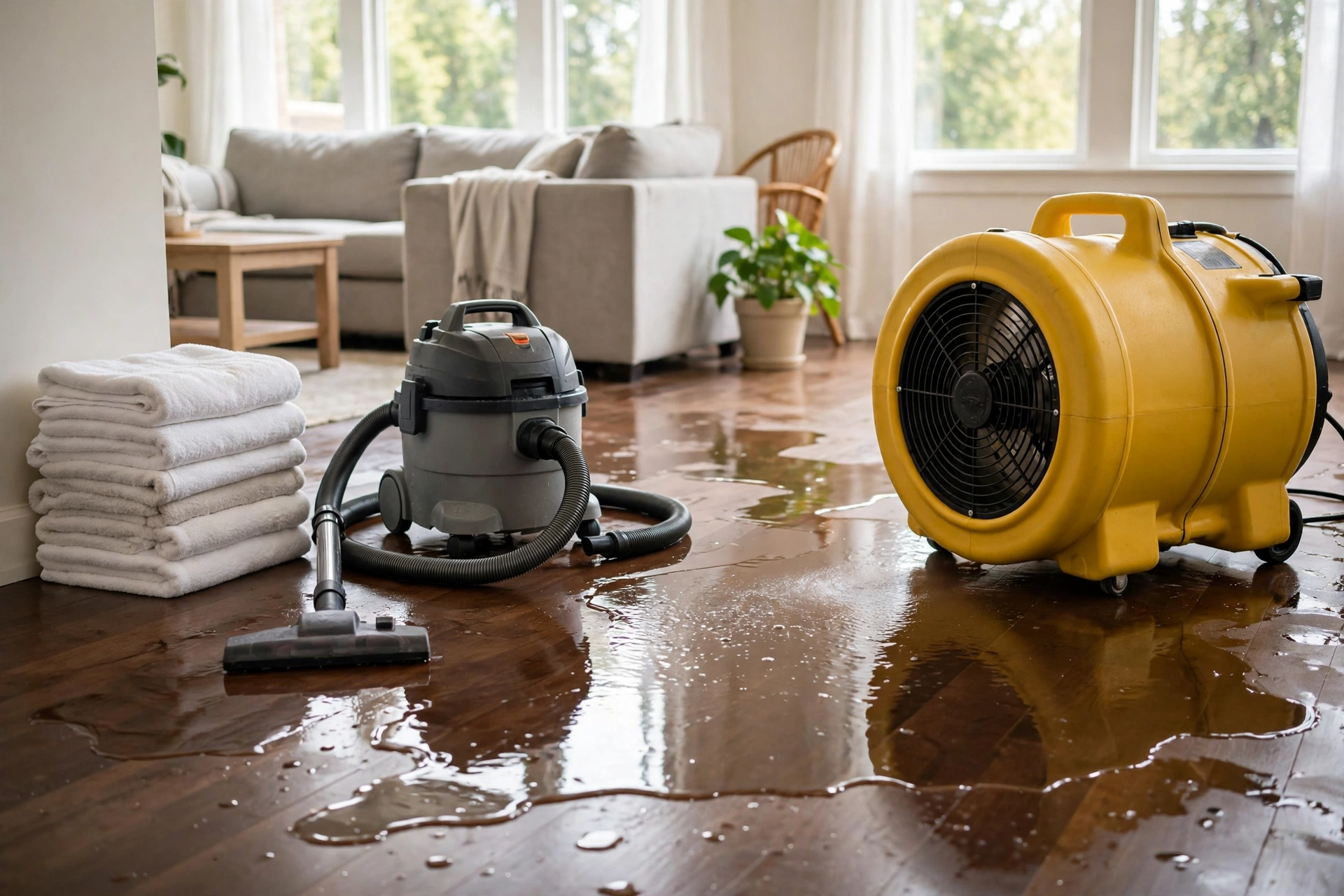
Start with the water you can see. Mop and towel up puddles, push water toward a drain or a door with a squeegee, and use a wet vacuum if you have one. A wet vacuum pulls water out of carpet and off hard floors far faster than towels, and it reaches the edges where water hides under baseboards and behind furniture.
Work from the far end of the wet area toward the exit, so you are not walking through water you have already cleared. Lift rugs and roll them out of the room, and move furniture onto blocks or foil so the legs do not sit in water and stain the floor. Every hour that standing water sits, it soaks deeper into wood and drywall.
Stay safe while you work. Turn off power to any room where water is near outlets or appliances, and do not step into standing water near electrical equipment. Wear rubber boots and gloves, and keep children and pets out of the wet rooms until the floors are dry and the power is back on.
Related: burst pipe cleanup and water damage
Water Damage Cleanup Steps After a Burst Pipe
Read the guide, then describe your burst pipe problem and request service.
Drying Walls, Floors, and Cabinets
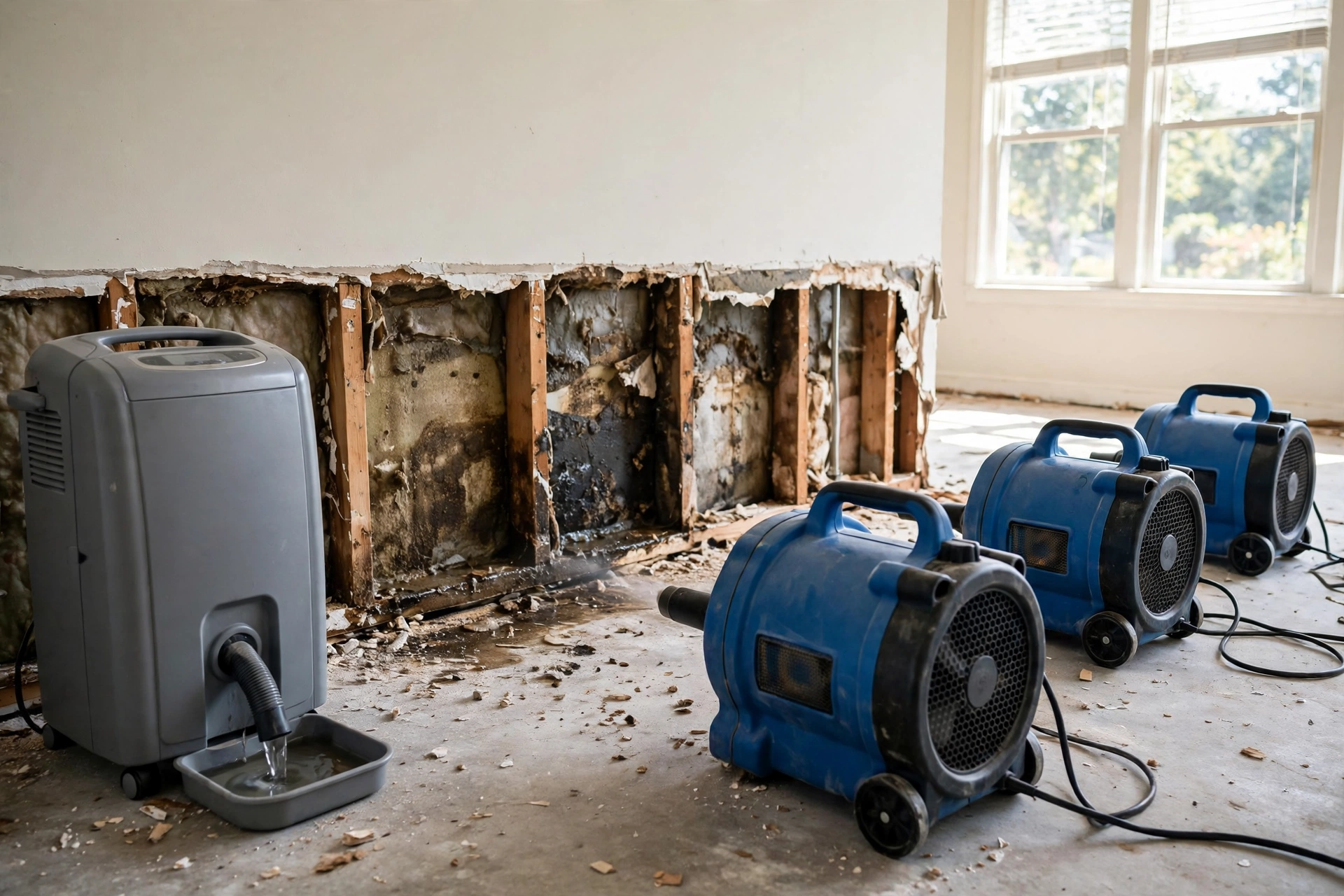
Drying takes days, and it is the step most people cut short. Set up fans to blow air across wet surfaces, not just into the middle of the room, and run a dehumidifier to pull moisture out of the air so the fans have dry air to work with. Open interior doors and lift curtains so air moves through every wet corner.
Walls dry from the bottom up, so pull the baseboards and check the drywall behind them. Drywall that has soaked up to a hand width or more often needs to be cut away so the studs and insulation behind it can dry. Cabinets need the same treatment: open the doors, pull out the contents, and check the base and the back panel for dampness.
Hardwood floors need patience. They may cup as they dry, and many flatten back out over days if the drying starts early. Do not sand or refinish a cupped floor until it has fully dried and settled, because sanding too soon locks in the shape. Check the moisture with your hand and your nose: a floor that still smells damp is still wet inside.
Related: emergency burst pipe repair, burst pipe repair in Laguna Beach
Get Burst Pipe Help in Newport Beach Today
Tell us where the water is and request service anywhere in Newport Beach.
What to Save and What to Let Go
Clean water from a supply line is the easiest kind of water damage to recover from, and most hard surfaces, metal, and glass can be wiped clean and kept. Solid wood furniture can often be saved if it is dried quickly and kept out of direct heat, and rugs can be lifted, cleaned, and dried flat away from the wet room.
Paper, cardboard, and particle board are harder to save. Books and papers that soaked through will warp and stain, and particle board swells and crumbles once it is wet. Bag anything you want to keep and set it aside to dry separately, and photograph anything you throw away before it goes out, because the photos matter for your records.
Drywall and insulation that stayed wet for more than a day usually need to come out, and carpet padding almost always does. Padding holds water like a sponge and dries too slowly to save, while the carpet above it can often be lifted, cleaned, and put back on new padding. When in doubt, remove the wet material: trapped dampness causes more harm than an early replacement.
Related: burst pipe cleanup and water damage
Burst Pipe Repair Across the Orange County Coast
A local contractor can take your burst pipe request today.
Preventing Mold After a Burst Pipe
Mold starts where water lingers, and coastal humidity gives it a head start. The best prevention is fast, thorough drying: fans and a dehumidifier running around the clock, wet drywall and insulation removed, and damp corners opened up so air can reach them. A room that feels dry to the touch can still be damp inside the wall, so keep the equipment running even after the surfaces look fine.
Wipe hard surfaces with a household cleaner and let them dry fully before you put furniture back. Soft goods that stayed damp, like cushions and drapes, should be washed or cleaned before they return to the room. If a musty smell lingers after several days of drying, something is still wet, and it is usually behind a baseboard or inside a cabinet.
Watch the room for the next few weeks. Check the baseboards, the corners, and the backs of cabinets for spots or smells, and keep the dehumidifier running until the air feels normal again. A burst pipe that is dried properly leaves no trace. A burst pipe that is dried halfway leaves a mold problem that costs far more than the drying ever would.
Related: burst pipe cleanup and water damage, burst pipe repair in Newport Beach
Water Damage Cleanup Steps After a Burst Pipe
Read the guide, then describe your burst pipe problem and request service.
Water Damage Cleanup Questions, Answered
Quick answers about drying out after a burst pipe.
Usually several days, not hours. Fans and a dehumidifier should run around the clock, and walls, floors, and cabinets need to dry all the way through before furniture goes back.
Sometimes, if it only got a little wet and dries fast. Drywall that soaked up high or stayed wet for more than a day usually needs to be cut out so the studs behind it can dry.
Mold can start growing on damp surfaces within a couple of days, and faster in humid coastal air. Fast drying, removing wet drywall and padding, and keeping air moving are the best prevention.
Yes, along with a dehumidifier. Fans move air across wet surfaces and the dehumidifier pulls moisture out of the air, so the two together dry a room far faster than either one alone.
Related Burst Pipe Guides
Trenchless Pipe Repair Explained for Homeowners
Trenchless pipe repair fixes a damaged underground pipe through small access points instead of an open trench ...
Learn MoreSigns of a Burst Pipe in Newport Beach Homes
The clearest signs of a burst pipe are hissing or rushing water behind a wall, a sudden drop in water pressure...
Learn MoreCopper vs PEX Repiping for Coastal Newport Beach Homes
Copper is rigid, proven, and familiar, but salt air corrodes it from the outside and pinhole leaks are its wea...
Learn MoreWater Damage Cleanup Steps After a Burst Pipe
After a burst pipe, shut off the water, remove standing water with towels, a mop, or a wet vacuum, then dry the room with fans and a dehumidifier for days, not hours. Lift furniture and rugs off wet floors, open cabinet doors, and pull back wet carpet from the wall so air can reach the damp edges. Rooms that stay damp grow mold, so thorough drying is the real cleanup, and it matters most in Newport Beach homes where humid coastal air slows drying on its own.
Get Help From a Local Specialist
Request service and a local burst pipe contractor will help.
Call Us
Emergency burst pipe help across Newport Beach.
Phone number to be decidedEmail Us
Send questions about a leak or repair.
Email address to be decidedVisit Us
Proudly serving Newport Beach and the Orange County coast.
Address to be confirmed